Operating at the speed of the market.
Search arbitrage taught me to treat paid media less like campaign management and more like trading.
monthly media spend managed with the team.
campaign launches per day after automation.
ads produced per day at peak throughput.
generated creative assets in the library and counting.
Buy traffic for less than the traffic is worth downstream.
I had no idea what search arbitrage was before I joined the space in 2021.
In the simplest form, you buy a user from one traffic source, send that user into a monetized search experience, and keep the spread if the downstream revenue is higher than what you paid to acquire them.
The buy side moves. The payout moves too.
In most performance marketing, the value of what you are selling is relatively stable. Your main job is controlling acquisition cost.
Search arb is different. The cost of buying traffic changes, and the value of that traffic downstream changes too. Geography, device, time, advertiser demand, keyword economics and auction depth can all move the payout.
That is why I describe it as day trading ads.
What you pay to acquire traffic can move throughout the day.
What that traffic earns downstream can move at the same time.
Tight margins make throughput the game.
Meaningful profit comes from volume, and volume requires a lot of research, a lot of launches and a lot of decisions.
You research where advertisers are bidding, find the keyword markets worth testing, then build direct-response creative strong enough to get someone off one platform and into a search.
If the keyword research is weak, the ad cannot save you. If the ad is weak, the keyword opportunity never gets monetized. You need both.
11,240+ assets later, creative stopped being a folder problem.
At this volume, creative cannot be made manually in Canva.
I built a structured pattern library so proven approaches could be organized by topic, audience, use case and performance, then adapted into new campaigns instead of reinvented from scratch.
The goal was not to automate taste. It was to stop forgetting what we had already learned.


























































The pattern library behind the volume
| ID | Input sample | Use case | Audience | Topic | Tags | Status |
|---|---|---|---|---|---|---|
| 01 | Used Jeep Wrangler Guide | Buyer guide | Drivers | Automotive | Winner | |
| 02 | Bald Spots Due to Alopecia | Symptom checker | Women | Health & Medical | Test | |
| 03 | Foods for Healthy Heart | Lifestyle tips | Everyone | Food & Nutrition | Winner | |
| 04 | Budget Friendly Lawn Help for Seniors | Lifestyle tips | Seniors | Home & Living | Winner | |
| 05 | Industrial Metal Storage Buildings | Buyer guide | Business owners | Home & Living | Test | |
| 06 | Explore Stylish Summer Sandals | Clothing guide | Women | Fashion & Beauty | Winner |
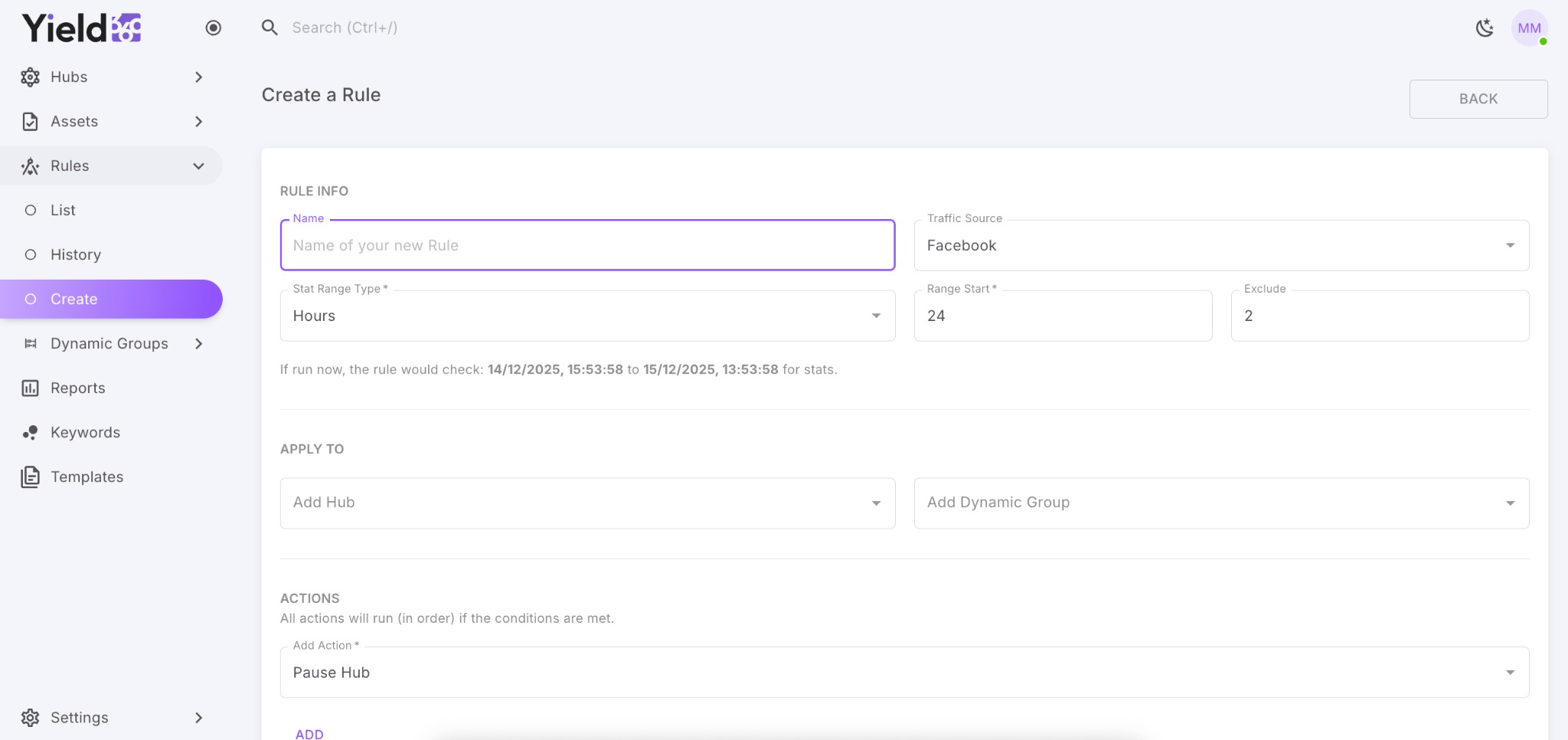
Then I helped translate the buyer workflow into the product.
Yield360 was building an all-in-one platform for search-arbitrage operators. I joined as Head of Performance Marketing, built a media-buying team from scratch to six buyers, and worked with the product through the lens of the people actually using it every day.
I was not the engineer building the SaaS product. My value was knowing which decisions buyers were repeatedly making and helping turn those into product requirements around automation, reporting, tracking and campaign controls.
Performance is a moving target.
Search arbitrage changed how I think about growth. Markets move. Margins compress. Creative gets tired. Good opportunities disappear. Bad ones need to die quickly.
It also taught me to have a steady hand. Look at the signals, make the decision and move on. No hard feelings if a campaign you put work into gets shut off. Launch more. Drive results.
No sunk-cost thinking. No attachment to the campaign. Keep the portfolio healthy and keep launching.